Note: special webpages for: [electro-optic THz detection] [electron bunch length measurements]
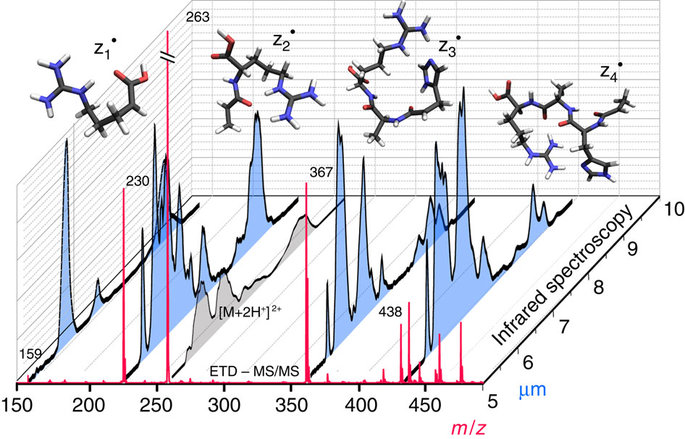
Structural identification of electron transfer dissociation products in mass spectrometry using infrared ion spectroscopy.
Jonathan K. Martens, Josipa Grzetic, Giel Berden, Jos Oomens
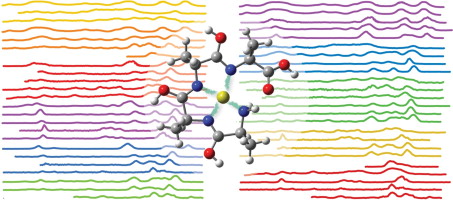
Tandem mass spectrometry occupies a principle place among modern analytical methods and drives many developments in the ‘omics’ sciences. Electron attachment induced dissociation methods, as alternatives for collision-induced dissociation have profoundly influenced the field of proteomics, enabling among others the top-down sequencing of entire proteins and the analysis of post-translational modifications. The technique, however, produces more complex mass spectra and its radical-driven reaction mechanisms remain incompletely understood. Here we demonstrate the facile structural characterization of electron transfer dissociation generated peptide fragments by infrared ion spectroscopy using the tunable free-electron laser FELIX, aiding the elucidation of the underlying dissociation mechanisms. We apply this method to verify and revise previously proposed product ion structures for an often studied model tryptic peptide, [AlaAlaHisAlaArg+2H]2+. Comparing experiment with theory reveals that structures that would be assigned using only theoretical thermodynamic considerations often do not correspond to the experimentally sampled species. © 2016 Springer Nature.
PDF file: download here
Nature Communications 7 (2016) 11754.
Gas-phase conformations of small polyprolines and their fragment ions by IRMPD spectroscopy.
Jonathan K. Martens, Josipa Grzetic, Giel Berden, Jos Oomens
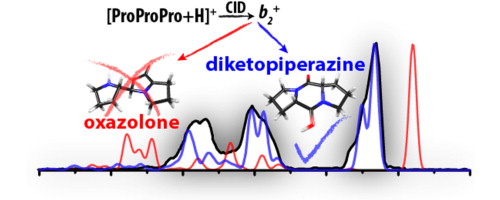
Infrared multiple-photon dissociation (IRMPD) spectroscopy has been used to examine the gas-phase conformations of a series of short protonated polyproline ions (Pro3–Pro6), their CID/IRMPD fragmentation pathways, and the associated fragment identities. Consistent with previous findings, and in combination with density functional theory (DFT) and MM/MD methods, a series of conformers for the protonated parent ions having their first peptide bond in the cis conformation has been identified. This conformation maximizes the solvation of the protonated N-terminus and stabilizes these compact globular-type conformations. This is in contrast to the PPI and PPII polyproline-type helices reported for larger polyproline peptides in solution. As well, this conformation leads to a unique fragmentation pattern upon collisional or multiple-photon activation. We report observation of the uncommon, but thermodynamically favored, diketopiperazine-type b2+ fragment ion. Formation of b2+ ions along the diketopiperazine pathway is in line with a cis configuration of the first amide linkage in the protonated parent ion. Additionally, the parent ion conformations, fragmentation pathways, and proton affinities of the resulting fragments have been related to the observed proline-effect in CID mass spectra. © 2015 Elsevier.
PDF file: download here
International Journal of Mass Spectrometry 377 (2015) 179-187.
Laboratory infrared spectroscopy of gaseous negatively charged polyaromatic hydrocarbons.

Juehan Gao, Giel Berden, and Jos Oomens
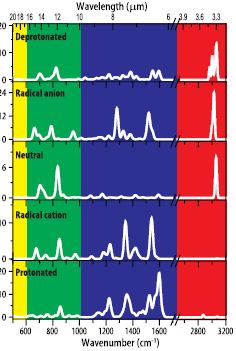
Based largely on infrared spectroscopic evidence, polycyclic aromatic hydrocarbon (PAH) molecules are now widely accepted to occur abundantly in the interstellar medium. Laboratory infrared spectra have been obtained for a large variety of neutral and cationic PAHs, but data for anionic PAHs are scarce. Nonetheless, in regions with relatively high electron densities and low UV photon fluxes, PAHs have been suggested to occur predominantly as negatively charged ions (anions), having substantial influence on cloud chemistry. While some matrix spectra have been reported for radical anion PAHs, no data is available for even-electron anions, which are more stable against electron detachment. Here we present the first laboratory infrared spectra of deprotonated PAHs ([PAH-H]–) in the wavelength ranges between 6 and 16 µm and around 3 µm. Wavelength-dependent infrared multiple-photon electron detachment is employed to obtain spectra for deprotonated naphthalene, anthracene, and pyrene in the gas phase. Spectra are compared with theoretical spectra computed at the density functional theory level. We show that the relative band intensities in different ranges of the IR spectrum deviate significantly from those of neutral and positively charged PAHs, and moreover from those of radical anion PAHs. These relative band intensities are, however, well reproduced by theory. An analysis of the frontier molecular orbitals of the even- and odd-electron anions reveals a high degree of charge localization in the deprotonated systems, qualitatively explaining the observed differences and suggesting unusually high electric dipole moments for this class of PAH molecules.
© 2014 The American Astronomical Society.
PDF file:download here
The Astrophysical Journal 787 (2014) 170.
Metal Ion Complexes with HisGly: Comparison with PhePhe and PheGly.
Robert C. Dunbar, Jos Oomens, Giel Berden, Justin Kai-Chi Lau, Udo H. Verkerk, Alan C. Hopkinson, and K. W. Michael Siu
Gas-phase complexes of five metal ions with the dipeptide HisGly have been characterized by DFT computations and by infrared multiple photon dissociation spectroscopy (IRMPD) using the free electron laser FELIX. Fine agreement is found in all five cases between the predicted IR spectral features of the lowest energy structures and the observed IRMPD spectra in the diagnostic region 1500–1800 cm–1, and the agreement is largely satisfactory at longer wavelengths from 1000 to 1500 cm–1. Weak-binding metal ions (K+, Ba2+, and Ca2+) predominantly adopt the charge-solvated (CS) mode of chelation involving both carbonyl oxygens, an imidazole nitrogen of the histidine side chain, and possibly the amino nitrogen. Complexes with Mg2+ and Ni2+ are found to adopt iminol (Im) binding, involving the deprotonated amide nitrogen, with tetradentate chelation. This tetradentate coordination of Ni(II) is the preferred binding mode in the gas phase, against the expectation under condensed-phase conditions that such binding would be sterically unfavorable and overshadowed by other outcomes such as metal ion hydration and formation of dimeric complexes. The HisGly results are compared with corresponding results for the PheAla, PheGly, and PhePhe ligands, and parallel behavior is seen for the dipeptides with N-terminal Phe versus His residues. An exception is the different chelation pattern determined for PhePhe versus HisGly, reflecting the intercalation-type cation binding pocket of the PhePhe ligand. The complexes group into three well-defined spectroscopic patterns: nickel and magnesium, calcium and barium, and potassium. Factors leading to differentiation of these distinct spectroscopic categories are (1) differing propensities for choosing the iminol binding pattern, and (2) single versus double charge on the metal center. Nickel and magnesium ions show similar gas-phase binding behavior, contrasting with their quite different patterns of peptide interaction in condensed phases.
© 2013 American Chemical Society.
PDF file: download here
Journal of Physical Chemistry A 117 (2013) 5335–5343.
Isomer-Selective Detection of Hydrogen-Bond Vibrations in the Protonated Water Hexamer.
Nadja Heine, Matias R. Fagiani, Mariana Rossi, Torsten Wende, Giel Berden, Volker Blum, and Knut R. Asmis
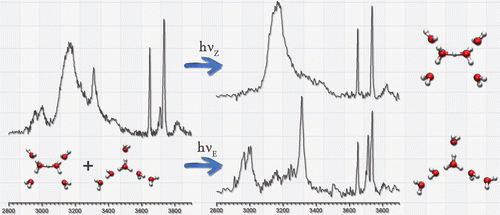
The properties of hydrogen ions in aqueous solution are governed by the ability of water to incorporate ions in a dynamical hydrogen bond network, characterized by a structural variability that has complicated the development of a consistent molecular level description of H+(aq). Isolated protonated water clusters, H+(H2O)n, serve as finite model systems for H+(aq), which are amenable to highly sensitive and selective gas phase spectroscopic techniques. Here, we isolate and assign the infrared (IR) signatures of the Zundel-type and Eigen-type isomers of H+(H2O)6, the smallest protonated water cluster for which both of these characteristic binding motifs coexist, down into the terahertz spectral region. We use isomer-selective double-resonance population labeling spectroscopy on messenger-tagged H+(H2O)6·H2 complexes from 260 to 3900 cm–1. Ab initio molecular dynamics calculations qualitatively recover the IR spectra of the two isomers and allow attributing the increased width of IR bands associated with H-bonded moieties to anharmonicities rather than excited state lifetime broadening. Characteristic hydrogen-bond stretching bands are observed below 400 cm–1. © 2013 American Chemical Society.
PDF file: download here
Reference: Journal of the American Chemical Society 135(2013) 8266-8273
Infrared multiple photon dissociation (IRMPD) spectroscopy of oxazine dyes.
Robert J. Nieckarz, Jos Oomens, Giel Berden, Pavel Sagulenko and Renato Zenobi
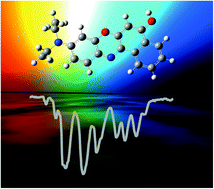
The structure and energetic properties of four common oxazine dyes, Nile red, Nile blue A, Cresyl violet, and Brilliant cresyl blue, have been probed using a combination of infrared multiple-photon dissociation (IRMPD) spectroscopy and quantum chemical calculations. IRMPD spectra of the protonated dyes, as generated from an electrospray ionization (ESI) source, were collected in the range of 900–1800 cm-1. Vibrational band assignments related to carbonyl and substituted-amine stretches were established from a comparison of the experimental spectra of these related systems as well as from a comparison with spectra generated by density functional theory (DFT) calculations. For Nile red, the thermochemical landscape for protonation at different basic sites was probed using DFT; comparison of IRMPD and calculated IR spectra reveals the site of protonation to be at the carbonyl oxygen. The structural information obtained here in the gas phase pertaining to these important fluorophores is anticipated to provide further insight into their associated intrinsic fluorescent properties in solution
© 2013 the Owner Societies.
PDF file: download here
Reference: Physical Chemistry Chemical Physics 15 (2013) 5049-5056.
Metal ion binding to peptides: Oxygen or nitrogen sites?
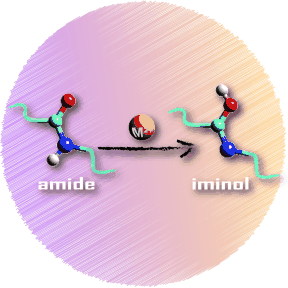
Robert C. Dunbar, Nicolas C. Polfer, Giel Berden, and Jos Oomens
Infrared multiple-photon dissociation (IRMPD) spectroscopy was used to probe the conformations of gas-phase metal-ion complexes between a series of five metal ions and six small peptide ligands. This report is presented in recognition and tribute for the Armentrout group's long and hugely productive interest in metal-ion binding to gas-phase ligands. The metal ions (K+, Ba2+, Ca2+, Mg2+, Ni2+) span a range of ligand binding strengths, and the ligands include several dipeptides and tripeptides, and one tetrapeptide. The weaker metal ions generally form charge-solvated (CS) complexes binding amide carbonyl oxygen, while the strongest metal ion, nickel, deprotonates the amide nitrogens, probably through iminol tautomerization, and binds to the amide nitrogens. The Amide II vibrational mode (1500–1550 cm-1) is found to be an excellent marker for the presence or absence of protons on amide nitrogens in a complex. The magnesium ion marks a boundary between these two structural motifs, forming iminol complexes with the dipeptides and switching to CS complexes for the tripeptides FGG and FGGF. Compared with solution-phase behavior, the iminol binding mode shown by Mg2+ for the smallest peptides is surprising, since this ion is considered as generally binding in a CS mode in solution. The present results for the larger peptides reconcile this surprising difference, showing that larger peptide ligands revert to the expected CS binding pattern for gas-phase Mg2+. © 2012 Elsevier.
PDF file: download here
International Journal of Mass Spectrometry 330-332 (2012) 71-77.
Peptide Bond Tautomerization Induced by Divalent Metal Ions: Characterization of the Iminol Configuration.
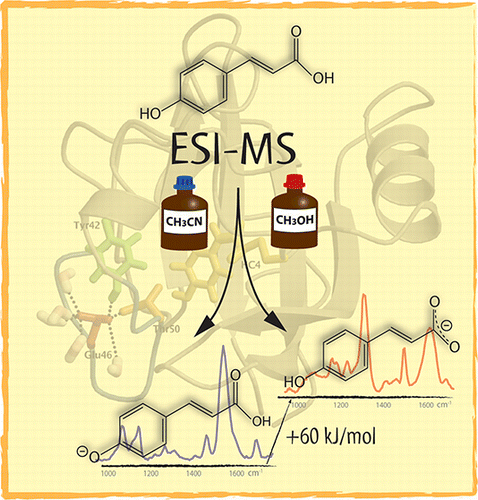
Robert C. Dunbar, Jeffry D. Steill, Nicolas C. Polfer, Giel Berden, and Jos Oomens
The attachment of gas-phase divalent metal ions that bind as strongly as Mg2+ and transition-metal ions to the dipeptide PhePhe results in displacement of the amide proton by the newly characterized iminol tautomerization rearrangment. More weakly coordinating ions bind in the known charge-solvation mode. Infrared multiple-photon dissociation spectroscopy using the free-electron laser clearly shows the tautomeric transition.
© 2012 WILEY-VCH Verlag GmbH.
PDF file: download here
Reference: Angewandte Chemie International Edition 51 (2012) 4591–4593.
Non-Equilibrium Isomer Distribution of the Gas-Phase Photoactive Yellow Protein Chromophore.
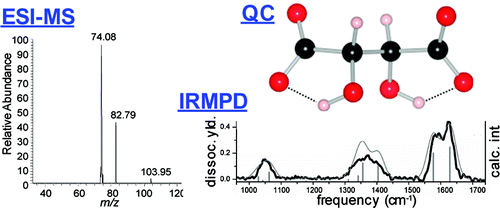
Mitra Almasian, Josipa Grzetic, Johanne van Maurik, Jeffrey D. Steill, Giel Berden, Steen Ingemann, Wybren Jan Buma, and Jos Oomens
The conjugate base of para-coumaric acid, which can be conveniently generated in the gas phase by electrospray ionization (ESI), is a commonly used model system for the chromophore of the photoactive yellow protein. Here we report its gas-phase IR spectrum, which shows that the anion easily adopts a carboxylate structure lying 60 kJ/mol higher in energy than the global minimum phenoxide structure. Generation of the biologically more relevant phenoxide isomer by ESI can be achieved using dry acetonitrile as solvent. © 2012 American Chemical Society.
PDF file: download here
Webpage: click here
Reference: Journal of Physical Chemistry Letters 3 (2012) 2259-2263.
Stability of Gas-Phase Tartaric Acid Anions Investigated by Quantum Chemistry, Mass Spectrometry, and Infrared Spectroscopy.
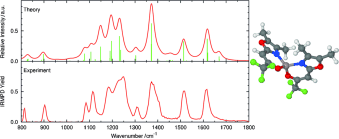
Ralf Tonner, Peter Schwerdtfeger, Amanda L. May, Jeffrey D. Steill, Giel Berden, Jos Oomens, Shawn R. Campagna, and Robert N. Compton
In an effort to understand the chemical factors that stabilize dianions, experimental and theoretical studies on the stability of the tartrate dianion were performed. Quantum chemical calculations at the coupled cluster level reveal only a metastable state with a possible decomposition pathway (O2C–CH(OH)–CH(OH)–CO2)2– --> (O2C–CH(OH)–CH(OH))•– + CO2 + e– explaining the observed gas-phase instability of this dianion. Further theoretical data were collected for the bare dianion, this molecule complexed to water, sodium, and a proton, in both the meso and l forms as well as for the uncomplexed radical anion and neutral diradical. The calculations suggest that the l-tartrate dianion is more thermodynamically stable than the dianion of the meso stereoisomer and that either dianion can be further stabilized by association with a separate species that can help to balance the charge of the molecular complex. Mass spectrometry was then used to measure the energy needed to initiate collisionally induced dissociation of the racemic tartrate dianion and for the proton and sodium adducts of both the racemic and meso form of this molecule. Infrared action spectra of the dianion stereoisomers complexed with sodium were also acquired to determine the influence of the metal ion on the vibrations of the dianions and validate the computationally predicted structures. These experimental data support the theoretical conclusions and highlight the instability of the bare tartrate dianion. From the experimental work, it could also be concluded that the pathway leading to dissociation is under kinetic control because the sodium adduct of the racemic stereoisomer dissociated at lower collisional energy, although it was calculated to be more stable, and that decomposition proceeded via C–C bond dissociation as computationally predicted. Taken together, these data provide insight into the gas-phase stability of the tartrate dianion and highlight the role of adducts in stabilizing this species. © 2012 American Chemical Society.
PDF file: download here
Journal of Physical Chemistry A 116 (2012) 4789–4800.
Examination of the Coordination Sphere of AlIII in Trifluoromethyl-Heteroarylalkenolato Complex Ions by Gas-Phase IRMPD Spectroscopy and Computational Modelling.
Lisa Brückmann, Wieland Tyrra, Sanjay Mathur, Giel Berden, Jos Oomens, Anthony J. H. M. Meijer and Mathias Schäfer
Oxygen, but not over all: Experimental and computational results indicate that the coordination sphere built up by the planar trifluoromethyl-heteroarylalkenolato ligands around aluminium(III) is tetrahedral, The first binding site of the bidentate ligands are the negatively charged enolate oxygens, whereas the second binding site is determined by the aromatic character of the heterocycle (see picture).© 2012 WILEY-VCH Verlag GmbH.
PDF file: download here
Reference: ChemPhysChem 13 (2012) 2037-2045.
Tweezer-like Complexes of Crown Ethers with Divalent Metals: Probing Cation-Size-Dependent Conformations by Vibrational Spectroscopy in the Gas Phase.
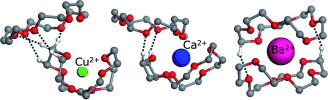
Francisco Gámez, Paola Hurtado, Said Hamad, Bruno Martínez-Haya, Giel Berden, and Jos Oomens
Crown ethers constitute central building blocks for the synthesis of molecular tweezers capable of trapping cationic species. In this study, isolated ternary complexes comprising two [18]crown-6 (18c6) ether molecules and one divalent cation of varying size (Cu2+, Ca2+, Ba2+) are investigated by means of laser vibrational action spectroscopy and computations. In the ternary (18c6)2–Cu2+ complex, one of the crown units folds tightly around the cation, while the second crown ether unit binds peripherally. Such asymmetrical binding manifests itself as a bimodal splitting of the vibrational bands measured for the complex. The size of the cation in the Ca2+ and Ba2+ complexes leads to a progressively more symmetrical coordination of the two crown ether molecules with the metal. In particular, in the spectrum of the (18c6)2–Ba2+ complex, the two components of the vibrational bands are merged into single-maximum envelopes. This is consistent with a C2 arrangement predicted by the computation, in which the cation coordinates with the two crown ether units in a fully symmetrical way. © 2012 WILEY-VCH Verlag GmbH.
PDF file: download here
Reference: ChemPlusChem 77 (2012) 118-123.
Mid-infrared spectroscopy of molecular ions in helium nanodroplets.
Xiaohang Zhang, Nils B. Brauer, Giel Berden, Anouk M. Rijs, and Marcel Drabbels
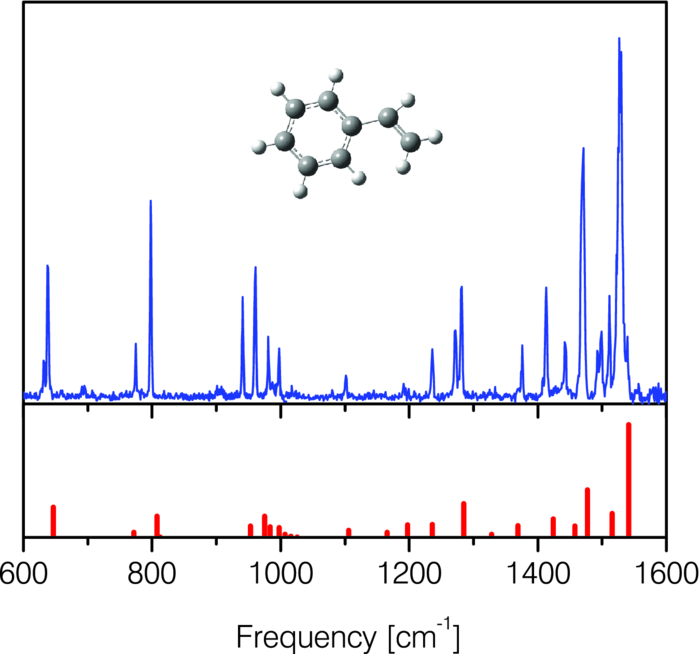
High resolution IR spectra of aniline, styrene, and 1,1-diphenylethylene cations embedded in superfluid helium nanodroplets have been recorded in the 300–1700 cm-1 range using a free-electron laser as radiation source. Comparison of the spectra with available gas phase data reveals that the helium environment induces no significant matrix shift nor leads to an observable line broadening of the resonances. In addition, the IR spectra have provided new and improved vibrational transition frequencies for the cations investigated, as well as for neutral aniline and styrene. Indications have been found that the ions desolvate from the droplets after excitation by a non-evaporative process in which they are ejected from the helium droplets. The kinetic energy of the ejected ions is found to be ion specific and to depend only weakly on the excitation energy. © 2012 American Institute of Physics.
PDF file: download here
Reference: Journal of Chemical Physics 136 (2012) 044305.
Structural Elucidation of Biological and Toxicological Complexes: Investigation of Monomeric and Dimeric Complexes of Histidine with Multiply Charged Transition Metal (Zn and Cd) Cations using IR Action Spectroscopy.
Theresa E. Hofstetter, Collin Howder, Giel Berden, Jos Oomens, and P. B. Armentrout
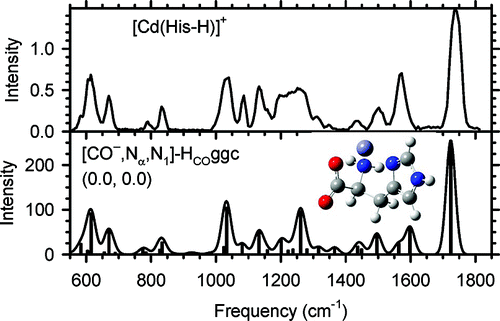
The gas-phase structures of singly and doubly charged complexes involving transition metal cations, Zn and Cd, bound to the amino acid histidine (His) as well as deprotonated His (His–H) are investigated using infrared multiple photon dissociation (IRMPD) spectroscopy utilizing light generated by a free electron laser. IRPMD spectra are measured for CdCl+(His), [Zn(His–H)]+, [Cd(His–H)]+, Zn2+(His)2, and Cd2+(His)2 in the 550–1800 cm–1 range. These studies are complemented by quantum mechanical calculations of the predicted linear absorption spectra at the B3LYP/6-311+G(d,p) and B3LYP/Def2TZVP levels. The monomeric spectra are similar to one another and indicate that histidine coordinates to the metal in a charge-solvated (CS) tridentate form in the CdCl+(His) complex and has a similar tridentate configuration with a deprotonated carboxylic acid terminus in the [M(His–H)]+ complexes. The preference for these particular complexes is also found in the relative energetics calculated at the B3LYP, B3P86, and MP2(full) levels. The spectra of the dimer complexes have obvious CS characteristics, suggesting that at least one of the His ligands is charge solvated; however, there are also signatures for a salt-bridge (SB) formation in the second His ligand. The definitive assignment of a SB ligand is complicated by the presence of the CS ligand and conflicting relative energetics from the different levels of theory.
© 2011 American Chemical Society.
PDF file: download here
Reference: Journal of Physical Chemistry B 115 (2011) 12648–12661.
Structure and Reactivity of the N-Acetyl-Cysteine Radical Cation and Anion: Does Radical Migration Occur?
Sandra Osburn, Giel Berden, Jos Oomens, Richard A. J. O’Hair, and Victor Ryzhov
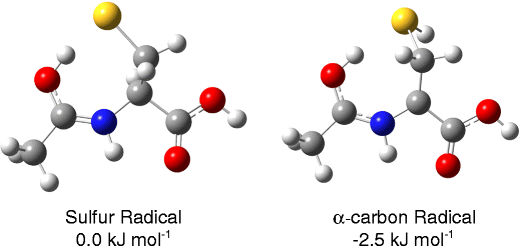
The structure and reactivity of the N-acetyl-cysteine radical cation and anion were studied using ion-molecule reactions, infrared multi-photon dissociation (IRMPD) spectroscopy, and density functional theory (DFT) calculations. The radical cation was generated by first nitrosylating the thiol of N-acetyl-cysteine followed by the homolytic cleavage of the S–NO bond in the gas phase. IRMPD spectroscopy coupled with DFT calculations revealed that for the radical cation the radical migrates from its initial position on the sulfur atom to the a-carbon position, which is 2.5 kJ mol–1 lower in energy. The radical migration was confirmed by time-resolved ion-molecule reactions. These results are in contrast with our previous study on cysteine methyl ester radical cation and the study by Sinha et al. for cysteine radical cation where the radical was found to stay on the sulfur atom as formed. A similar approach allowed us to form a hydrogen-deficient radical anion of N-acetyl-cysteine, (M – 2H) •– . IRMPD studies and ion-molecule reactions performed on the radical anion showed that the radical remains on the sulfur, which is the initial and more stable (by 63.6 kJ mol–1) position, and does not rearrange. © 2011 American Society for Mass Spectrometry.
PDF file: download here
Reference: Journal of The American Society for Mass Spectrometry 22 (2011) 1794-1803.
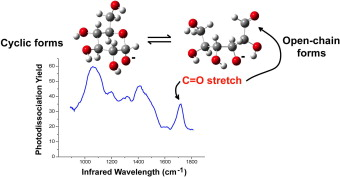
Direct evidence for the ring opening of monosaccharide anions in the gas phase: photodissociation of aldohexoses and aldohexoses derived from disaccharides using variable-wavelength infrared irradiation in the carbonyl stretch region.
Darin J. Brown, Sarah E. Stefan, Giel Berden, Jeffrey D. Steill, Jos Oomens, John R. Eyler, Brad Bendiak.
All eight d-aldohexoses and aldohexoses derived from the non-reducing end of disaccharides were investigated by variable-wavelength infrared multiple-photon dissociation (IRMPD) as anions in the negative-ion mode. Spectroscopic evidence supports the existence of a relatively abundant open-chain configuration of the anions in the gas phase, based on the observation of a significant carbonyl absorption band near 1710 cm-1. The abundance of the open-chain configuration of the aldohexose anions was approximately 1000-fold or greater than that of the neutral sugars in aqueous solution. This provides an explanation as to why it has not been possible to discriminate the anomeric configuration of aldohexose anions in the gas phase when derived from the non-reducing sugar of a disaccharide. Evidence from photodissociation spectra also indicates that the different aldohexoses yield product ions with maximal abundances at different wavelengths, and that the carbonyl stretch region is useful for differentiation of sugar stereochemistries. Quantum-chemical calculations indicate relatively low energy barriers to intramolecular proton transfer between hydroxyl groups and adjacent alkoxy sites located on open-chain sugar anions, suggesting that an ensemble of alkoxy charge locations contributes to their observed photodissociation spectra. Ring opening of monosaccharide anions and interconversion among configurations is an inherent property of the ions themselves and occurs in vacuo independent of solvent participation. © 2011 Elsevier.
PDF file: download here
Reference: Carbohydrate Research 346 (2011) 2469-2481.
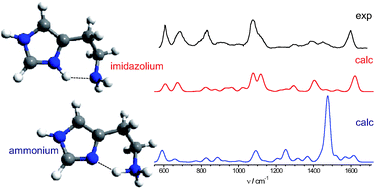
Infrared spectra of the protonated neurotransmitter histamine: competition between imidazolium and ammonium isomers in the gas phase.
Anita Lagutschenkov, Judith Langer, Giel Berden, Jos Oomens and Otto Dopfer
The infrared (IR) spectrum of protonated histamine (histamineH+) was recorded in the 575–1900 cm-1 fingerprint range by means of IR multiple photon dissociation (IRMPD) spectroscopy. The IRMPD spectrum of mass-selected histamineH+ ions was obtained in a Fourier transform ion cyclotron resonance mass spectrometer coupled to an electrospray ionization source and an IR free electron laser. A variety of isomers were identified and characterized by quantum chemical calculations at the B3LYP and MP2 levels of theory using the cc-pVDZ basis set. The low-energy isomers are derived from various favourable protonation sites—all of which are N atoms—and different orientations of the ethylamine side chain with respect to the heterocyclic imidazole ring. The measured IRMPD spectrum was monitored in the NH3 loss channel and exhibits 14 bands in the investigated spectral range, which were assigned to vibrational transitions of the most stable isomer, denoted A. This imidazolium-type isomer A with protonation at the imidazole ring and gauche conformation of the ethylamine side chain is significantly stabilized by an intramolecular ionic Np–H+Na hydrogen bond to the ethylamino group. The slightly less stable ammonium-type isomer B with protonation at the ethylamino group is only a few kJ mol-1 higher in energy and may also provide a minor contribution to the observed IRMPD spectrum. Isomer B is derived from A by simple proton transfer from imidazole to the ethylamino group along the intramolecular Np–H+Na hydrogen bond via a low barrier, which is calculated to be of the order of 5–15 kJ mol-1. Significantly, the most stable structure of isolated histamineH+ differs from that in the condensed phase by both the protonation site and the conformation of the side chain, emphasizing the important effects of solvation on the structure and function of this neurotransmitter. The effects of protonation on the geometric and electronic structure of histamine are evaluated by comparing the calculated properties of isomer A with those of the most stable structure of neutral histamine A(n).
© 2011 the Owner Societies.
PDF file: download here
Reference: Physical Chemistry Chemical Physics 13 (2011) 15644-15656.
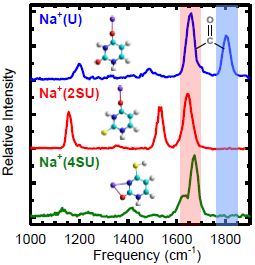
Infrared multiple photon dissociation action spectroscopy of sodiated uracil and thiouracils: Effects of thioketo-substitution on gas-phase conformation.
Y.-W. Nei, T.E. Akinyemi, C.M. Kaczan, J.D. Steill, G. Berden, J. Oomens, and M.T. Rodgers
The gas phase structures of sodium cationized complexes of uracil and five thiouracils including 2-thiouracil (2SU), 5-methyl-2-thiouracil (5Me2SU), 6-methyl-2-thiouracil (6Me2SU), 4-thiouracil (4SU), and 2,4-dithiouracil (24dSU) are examined via infrared multiple photon dissociation (IRMPD) action spectroscopy and theoretical electronic structure calculations. The IRMPD spectra of all six sodium cationized complexes exhibit both characteristic and unique spectral features over the range from 1000 to 1900 cm-1 such that the complexes are easily differentiated. The intense band at 1800 cm-1 in the IRMPD action spectrum of Na+(U) indicates that, as expected, a free carbonyl group is present in this complex. Absence of an intense band at 1800 cm-1 in the IRMPD action spectra for Na+(2SU), Na+(5Me2SU), Na+(6Me2SU), and Na+(4SU) complexes suggests that either sodium cationization preferentially stabilizes a minor tautomer of the nucleobase, or that the sodium cation binds to the keto group in these complexes, such that no free carbonyl stretch is observed. Measured IRMPD action spectra are compared to linear IR spectra calculated at the B3LYP/6-31G(d) level of theory to identify the structures accessed in the experimental studies. Based on these comparisons and the energetic predictions from theory, sodium cations preferentially bind at the 4-keto position of the canonical 2,4-diketo or 2-thioketo-4-keto tautomer in the Na+(U), Na+(2SU), Na+(5Me2SU), and Na+(6Me2SU) complexes. In contrast, sodium cationization results in preferential stabilization of a minor tautomer of the nucleobase in the Na+(4SU) and Na+(24dSU) complexes, where proton transfer from the N3H group to the 4-thioketo group, facilitates strong binding of the sodium cation via chelation with the O2(S2) and N3 atoms. © 2011 Elsevier.
International Journal of Mass Spectrometry
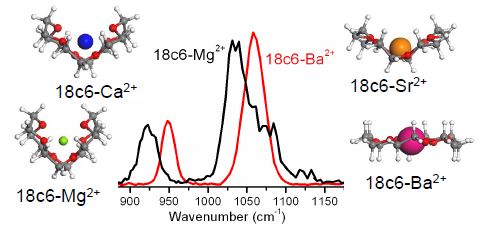
Vibrational study of isolated 18-crown-6 ether complexes with alkaline-earth metal cations.
Francisco Gameza, Paola Hurtadoa, Bruno Martinez-Hayaa, Giel Berden and Jos Oomens
Laser infrared multiple photon dissociation (IRMPD) spectroscopy has been employed to probe the C-O and C-C stretching vibrational modes of 18-crown-6 ether (18c6) complexes with alkaline-earth metals (Mg2+, Ca2+, Sr2+ and Ba2 + ) stored in the cell of a Fourier Transform Ion Cyclotron Resonance mass spectrometer. Computations at the B3LYP/6-311 + +G(2d,2p) and B3LYP/aug-cc-pVDZ levels of theory agree well with the most salient features of the experimental spectra and allow to characterize the lower energy conformers for each type of complex. A pronounced shift of the C-O stretching band, but not of the C-C band, is found in comparison to the similar IRMPD spectra reported previously for the 18c6 complexes with alkali metals. This is attributed to the tighter coordination and stronger binding of the divalent alkaline-earth cations to the oxygen sites, and to the degree of folding of the crown ether backbone. Nevertheless, the conformational landscape and symmetry constraints of the complexes follow a pattern similar to that found for the alkali metal cations. The most stable conformers evolve from compact D2 geometries for the smaller cations, Mg2+ and Ca2+, to more open C2 configurations for Sr2+ and to a planar D3d structure for Ba2+.
© 2011 Elsevier.
International Journal of Mass Spectrometry
IR Spectroscopy of Isolated Neutral and Protonated Adenine and 9-Methyladenine.
Gydo C. P. van Zundert, Sander Jaeqx, Giel Berden, Joost M. Bakker, Karl Kleinermanns, Jos Oomens and Anouk M. Rijs
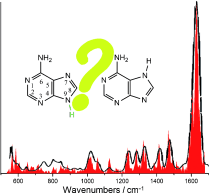
IR spectroscopy is employed to study isolated adenine and its derivative 9-methyladenine in both their neutral and protonated forms. The IR spectra of neutral adenine and 9-methyladenine are measured in a molecular beam expansion via IR–UV ion-dip spectroscopy in the 525 to 1750 cm-1 region. For adenine, UV excitation selects the 9H tautomer to give a conformer-selective IR spectrum. For 9-methyladenine, only one tautomer exists because of the methyl substitution at the N(9) position. The experimental spectra agree closely with spectra computed for these tautomers at the B3LYP/6-311++G(df,pd) level of theory. These spectra complement previous tautomer-specific IR spectra in the hydrogen stretching range. The 9H-adenine spectrum obtained is compared to a previously recorded FTIR spectrum of adenine at 280°C, which shows close agreement, although the 7H tautomer cannot be excluded from contributing. Protonated adenine and 9-methyladenine are generated by electrospray ionization and studied via IR multiple-photon dissociation (IRMPD) spectroscopy. Comparison of the experimental spectra with computed spectra allows identification of the protonation site, which suggests that the 1-9 tautomer is the dominant contributor to the spectra.
© 2011 Wiley.
PDF file: download here
Chem. Phys. Chem. 12 (2011) 1921-1927.
Isomer Population Analysis of Gaseous Ions From Infrared Multiple Photon Dissociation Kinetics.
James S. Prell, Terrence M. Chang, Jeffrey A. Biles, Giel Berden, Jos Oomens, and Evan R. Williams
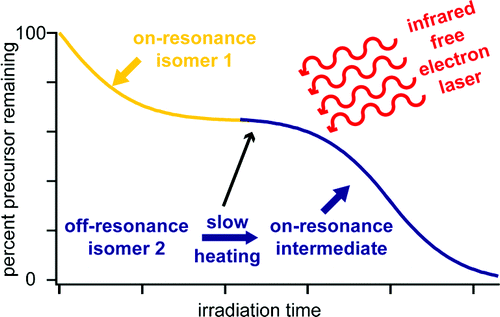
Infrared multiple photon dissociation (IRMPD) kinetics measured with tunable laser radiation from a free electron laser (FEL) are used to probe the relative populations of and interconversions between energetically competitive isomers of gas-phase ions at 298 K. On-resonance IRMPD kinetics of monoisomeric benzoate anion and anilinium (protonated aniline) are measured to determine the extent of overlap of the laser beam with the precursor ion population (93%). IRMPD kinetics indicating different photodissociation behavior for different isomers obtained at isomer-specific resonances are used to determine relative populations of salt bridge and charge-solvated isomers for ArgGly·Na+, Ser·Cs+, and Arg·Na+. These values and Gibbs free energy differences obtained from them for thermal precursor populations are compared to values reported using other, less direct population probes. Rapid interconversion of two charge-solvated isomers occurs for ArgGly·Li+, precluding population analysis for this ion. ArgGly·Na+, ArgGly·Li+, and Arg·Na+ exhibit IRMPD induction periods lasting many seconds for some isomers at the laser photon energies and power used, indicating that IRMPD relative spectral intensities are time-dependent for these ions and that the relative band intensities in IRMPD spectra measured with short irradiation times may not provide meaningful information about relative isomer populations. These results constitute the first direct probe of ion isomer populations using IRMPD kinetics obtained with a FEL and illustrate a number of caveats in interpreting IRMPD spectra measured with just a single irradiation time. These results also indicate that more complete overlap of the laser beam with the ions will be highly advantageous in future instrument designs for IRMPD kinetics and spectroscopy experiments.
© 2011 American Chemical Society.
PDF file: download here
Journal of Physical Chemistry A 115 (2011) 2745-2751.
Gas Phase Infrared Multiple Photon Dissociation Spectra of Positively Charged Sodium Bis(2-ethylhexyl)sulfosuccinate Reverse Micelle-like Aggregates.
Gianluca Giorgi, Leopoldo Ceraulo, Giel Berden, Jos Oomens, and Vincenzo Turco Liveri
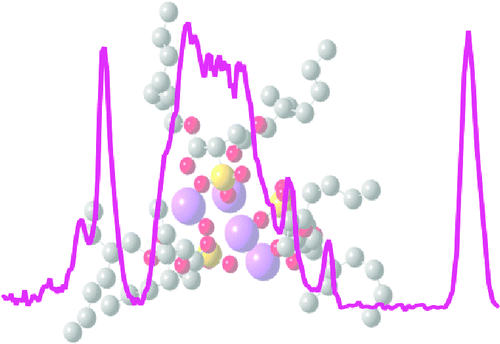
The capability of infrared multiple photon dissociation (IRMPD) spectroscopy to gain structural information on surfactant-based supramolecular aggregates has been exploited to elucidate intermolecular interactions and local organization of positively charged sodium bis(2-ethylhexyl)sulfosuccinate (AOTNa) aggregates in the gas phase. A detailed analysis of the stretching modes of the AOTNa CO and SO3- head groups allows one to directly probe their interactions with sodium counterions and to gain insight in their organization within the aggregate. Similarities and differences of the IRMPD spectra as compared to the infrared absorption spectrum of micellized AOTNa in CCl4 have been analyzed. They strongly suggest a reverse micelle-like organization of AOTNa charged aggregates in the gas phase. Apart from low-abundance fragmentation channels of the AOTNa (molecule) itself, the main dissociation pathway of singly charged surfactant aggregates is the loss of neutral surfactant molecules, while doubly charged aggregates dissociate preferentially by charge separation forming singly charged species. In both cases, decomposition leads to the formation of the most energetically stable charged fragments.
© 2011 American Chemical Society.
PDF file: download here
Reference: Journal of Physical Chemistry B 115 (2011) 2282-2286.
Time-Resolved Holography with Photoelectrons.
Y. Huismans, A. Rouzée, A. Gijsbertsen, J.H. Jungmann, A.S. Smolkowska, P.S.W.M. Logman, F. Lépine, C. Cauchy, S. Zamith, T. Marchenko, J.M. Bakker, G. Berden, B. Redlich, A.F.G. van der Meer, H.G. Muller, W. Vermin, K.J. Schafer, M. Spanner, M. Yu. Ivanov, O. Smirnova, D. Bauer, S.V. Popruzhenko, and M.J.J. Vrakking
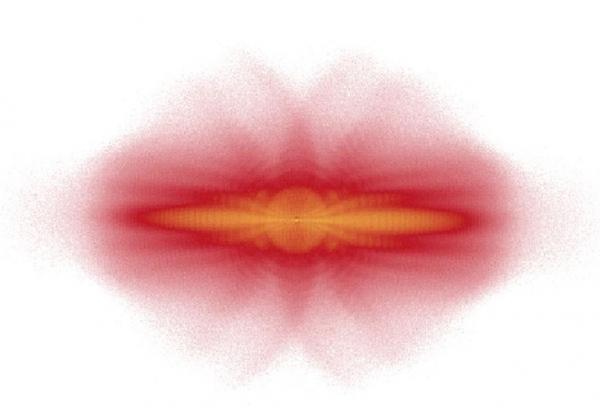
Abstract: Ionization is the dominant response of atoms and molecules to intense laser fields and is at the basis of several important techniques, such as the generation of attosecond pulses that allow to measure electron motion in real time. We present experiments where metastable xenon atoms are ionized by intense 7-micrometer laser pulses from a free electron laser. Holographic structures are observed that record underlying electron dynamics on a sub-laser cycle time scale, enabling photoelectron spectroscopy with a time resolution almost two orders of magnitude higher than the duration of the ionizing pulse. © 2011 Science.
PDF file: download here
Reference: Science 331 (2011) 61-64.
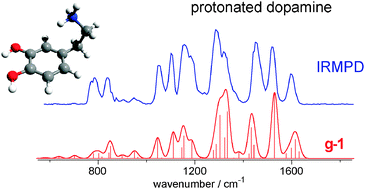
Infrared Spectra of Protonated Neurotransmitters: dopamine
Anita Lagutschenkov, Judith Langer, Giel Berden, Jos Oomens, and Otto Dopfer
Abstract: The infrared (IR) spectrum of the isolated protonated neurotransmitter dopamine was recorded in the fingerprint range (570–1880 cm-1) by means of IR multiple photon dissociation (IRMPD) spectroscopy. The spectrum was obtained in a Fourier transform ion cyclotron resonance mass spectrometer equipped with an electrospray ionization source, which was coupled to a free electron laser (FEL). The spectroscopic studies are complemented by quantum chemical calculations at the B3LYP and MP2 levels of theory using the cc-pVDZ basis set. Several low-energy isomers with protonation occurring at the amino group are predicted in the energy range 0–50 kJ mol-1. Good agreement between the measured IRMPD spectrum and the calculated linear absorption spectra is observed for the two gauche conformers lowest in energy and free energy at both levels of theory, denoted g-1 and g+1. Minor contributions of higher lying gauche isomers cannot be ruled out spectroscopically but their calculated energies suggest only minor population in the sampled ion cloud. In all these gauche structures, one of the three protons of the ammonium group is pointing toward the catechol subunit, thereby maximizing the intramolecular NH–p interaction of the positive charge with the aromatic ring. In total, 16 distinct vibrational bands are observed in the IRMPD spectrum and assigned to individual normal modes of the energetically most stable g-1 conformer, with deviations of less than 24 cm-1 (average 11 cm-1) between measured and calculated frequencies. Comparison with neutral dopamine reveals the effects of protonation on the geometric and electronic structure.
© 2011 the Owner Societies.
PDF file: download here
Reference: Physical Chemistry Chemical Physics 13 (2011) 2815-2823.
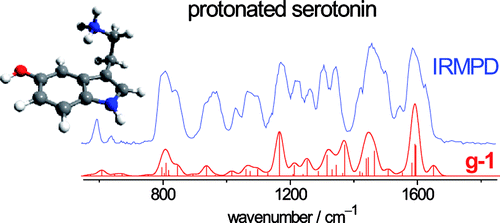
Infrared Spectra of Protonated Neurotransmitters: Serotonin
Anita Lagutschenkov, Judith Langer, Giel Berden, Jos Oomens, and Otto Dopfer
Abstract: The gas-phase IR spectrum of the protonated neurotransmitter serotonin (5-hydroxytryptamine) was measured in the fingerprint range by means of IR multiple photon dissociation (IRMPD) spectroscopy. The IRMPD spectrum was recorded in a Fourier transform ion cyclotron resonance mass spectrometer coupled to an electrospray ionization source and an IR free electron laser. Quantum chemical calculations at the B3LYP and MP2 levels of theory using the cc-pVDZ basis set yield six low-energy isomers in the energy range up to 40 kJ/mol, all of which are protonated at the amino group. Protonation at the indole N atom or the hydroxyl group is substantially less favorable. The IRMPD spectrum is rich in structure and exhibits 22 distinguishable features in the spectral range investigated (530-1885 cm-1). The best agreement between the measured IRMPD spectrum and the calculated linear IR absorption spectra is observed for the conformer lowest in energy at both levels of theory, denoted g-1. In this structure, one of the three protons of the ammonium group points toward the indole subunit, thereby maximizing the intramolecular NH+-p interaction between the positive charge of the ammonium ion and the aromatic indole ring. This mainly electrostatic cation-p interaction is further stabilized by significant dispersion forces, as suggested by the substantial differences between the DFT and MP2 energies. The IRMPD bands are assigned to individual normal modes of the g-1 conformer, with frequency deviations of less than 29 cm-1 (average less than 13 cm-1). The effects of protonation on the geometric and electronic structure are revealed by comparison with the corresponding structural, energetic, electronic, and spectroscopic properties of neutral serotonin.
© 2010 American Chemical Society.
PDF file: download here
Reference: Journal of Physical Chemistry A 114 (2010) 13268-13276.
Effects of Anions on the Zwitterion Stability of Glu, His and Arg Investigated by IRMPD Spectroscopy and Theory
Jeremy T. O'Brien, James S. Prell, Giel Berden, Jos Oomens and Evan R. Williams
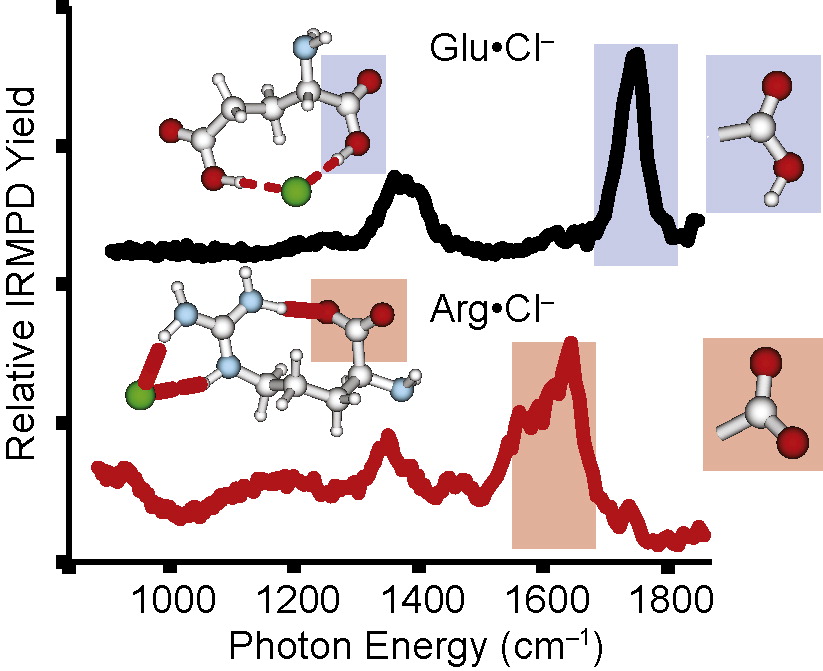
Abstract: Interactions of halide anions (Cl–, Br–, and I–) with glutamic acid (Glu), histidine (His), and arginine (Arg) and their effects on stabilizing the zwitterionic form of these amino acids were investigated using infrared multiple photon dissociation (IRMPD) spectroscopy between 850–1900 cm-1 and hybrid density functional theory. The IRMPD spectra of Glu•X–and His•X–each have a diagnostic carbonyl stretching band at 1750 cm-1 from a carboxylic acid group, indicating that the nonzwitterionic form of these amino acids is most stable. In contrast, a broad band at 1625 cm-1 for Arg•X–, consisting of the antisymmetric stretch of a carboxylate group and hydrogen bonded NH bends, clearly shows that Arg is zwitterionic in these complexes. There are many similarities between these spectra and those of cationized amino acids, which aid in spectral interpretation. Cl–and Cs+ are of comparable size, and attachment of either ion to these amino acids has little effect on the frequencies of these diagnostic carbonyl stretches. The coordination of cations to these amino acids is different from that of anions, resulting in a favorable alignment of the dipole moment of the carbonyl group with the electric field of ions of either polarity, which causes a redshift in this band, i.e., a Stark effect. There is a slight redshift (10 cm-1) in the carbonyl stretch band at 1750 cm-1 for Glu•X–and His•X–with decreasing anion size, consistent with both a Stark effect and with greater carboxylate character for the carboxylic acid group in complexes with the less acidic halide ions. The anion size has little effect on the structures and relative zwitterion stabilities for most of these complexes, which can be attributed to the large size of the halide anions investigated compared to that of the alkali metal cations where size effects are more pronounced. The spectra calculated for the lowest-energy structures are generally consistent with the experimental spectra, although no single structure accounts for the many distinct bands in the IRMPD spectra of His•X–
© 2010 Elsevier.
PDF file: download here
Reference: International Journal of Mass Spectrometry 297 (2010) 116-123.
Coordination of Trivalent Metal Cations to Peptides: Results from IRMPD Spectroscopy and Theory
James S. Prell, Tawnya G. Flick, Jos Oomens, Giel Berden, and Evan R. Williams
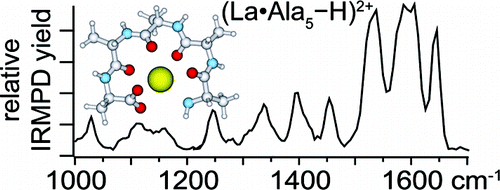
Abstract: Structures of trivalent lanthanide metal cations La3+, Ho3+, and Eu3+ with deprotonated Alan (n = 2-5) or Leu-enk (Tyr-Gly-Gly-Phe-Leu) are investigated with infrared multiple photon dissociation (IRMPD) spectroscopy between 900 and 1850 cm-1 and theory. In all of these complexes, a salt bridge is formed in which the metal cation coordinates to the carboxylate group of the peptide, resulting in a limited conformational space and many sharp IRMPD spectral bands. The IRMPD spectra clearly indicate that all carbonyl groups solvate the metal cation in each of the Alan complexes. Due to strong vibrational coupling between the carbonyl groups, a sharp, high-energy amide I band due to in-phase stretching of all of the amide carbonyl groups bound to the metal cation is observed that is separated by 50 cm-1 from a strong, lower-energy amide I band. This extent of carbonyl coupling, which is sometimes observed in condensed-phase peptide and protein IR spectroscopy, has not been reported in IRMPD spectroscopy studies of other cationized peptide complexes. Intense bands due to carbonyl groups not associated with the metal cation are observed for Leu-enk complexes, indicating that a side chain group, such as the Tyr or Phe aromatic ring, prevents complete carbonyl coordination of the metal cation. Substitution of smaller lanthanide cations for La3+ in these peptide complexes results only in minor structural changes consistent with the change in metal cation size. These are the first IRMPD spectra reported for lanthanide metal cationized peptides, and comparison to previously reported protonated and alkali metal or alkaline earth metal cationized peptide complexes reveals many trends consistent with the higher charge state of the lanthanide cations.
© 2010 American Chemical Society.
PDF file: download here
Reference: Journal of Physical Chemistry A 114 (2010) 854-860.
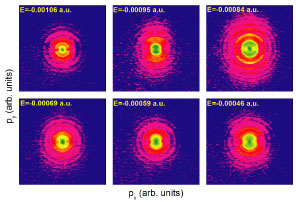
Above-threshold ionization in a strong dc electric field
Y. Ni, S. Zamith, F. Lépine, T. Martchenko, M. Kling, O. Ghafur, H. G. Muller, G. Berden, F. Robicheaux, and M. J. J. Vrakking
Abstract: High-lying Rydberg states of Xe have been ionized using intense 108 µm radiation from a free-electron laser. Measured two-dimensional photoelectron images reveal significant above-threshold ionization and contain an indirect contribution resulting from the combined action of the atomic Coulomb field, laser field, and dc electric field of the spectrometer on the electron. The observation of indirect ionization contains information about the electron localization directly after the laser excitation and indicates that the experiments are performed in the multiphoton regime of strong-field ionization. The experiments are compared to and interpreted by means of both classical and quantum-mechanical simulations. ©2008 The American Physical Society.
PDF file:
Physical Review A 78 (2008) 013413.
Journal: URL Link: http://link.aps.org/abstract/PRA/v78/e013413
Spin Relaxation by Transient Monopolar and Bipolar Optical Orientation
B.N. Murdin, K. Litvinenko, D.G. Clarke, C.R. Pidgeon, P. Murzyn, P.J. Phillips, D. Carder, G. Berden, B. Redlich, A.F.G. van der Meer, S. Clowes, J.J. Harris, L.F. Cohen, T. Ashley and L. Buckle
Abstract: We have used two-color time-resolved spectroscopy to measure the relaxation of electron spin polarizations in a bulk semiconductor. The circularly polarized pump beam induces a polarization either by direct excitation from the valence band, or by free-carrier (Drude) absorption when tuned to an energy below the band gap. We find that the spin relaxation time, measured with picosecond time resolution by resonant induced Faraday rotation in both cases, increases in the presence of photogenerated holes. In the case of the material chosen, n-InSb, the increase was from 14 to 38 ps. © 2006 The American Physical Society
PDF file: download here
Reference: Phys. Rev. Lett. 96, 096603 (2006)